Cast Iron Pipes in Pasco County Homes: Repair, Line, or Replace?
Most pre-1975 homes in New Port Richey, Port Richey and Holiday still run original cast iron drains. Here's how to tell what yours need — and what each option costs.
If your home in New Port Richey, Port Richey or Holiday was built before about 1975, there's a very good chance your drain lines are original cast iron — now 50 to 70 years old. Cast iron was the standard for its era and it served well, but in Florida's soil and humidity it corrodes from the inside out. This guide explains how to know where your pipes stand and what your real options are.
Why Cast Iron Fails in Florida
Cast iron corrodes through a process called tuberculation: rust builds up inside the pipe in rough, barnacle-like formations that catch grease, paper and debris. Over decades the smooth 4-inch channel your home started with becomes a rough 2-inch channel — and eventually the pipe wall itself scales, cracks, or collapses. Florida accelerates all of it: humid air, warm soil, and in coastal Pasco neighborhoods, occasional salt influence.
The Warning Signs
- Recurring backups — if you're snaking the same line every year, the pipe itself is the problem, not the clog.
- Slow drains throughout the house — one slow sink is a local clog; every drain slow points at the main line.
- Sewage odor in the yard or under the house — small cracks vent gas before they leak water.
- Lush green patches over the lateral run — the lawn is enjoying your leak.
- Rust-colored water backing up into tubs or showers during backups.
Step One Is Always a Camera Inspection
Nobody should quote you a cast iron repair without showing you the inside of the pipe. A sewer camera inspection tells you exactly what condition the line is in: light scale, heavy tuberculation, cracks, bellies, root intrusion, or collapse. The footage decides everything that follows — and it protects you from paying for a replacement a cleaning would have solved.
Option 1: Descale and Clean
If the pipe wall is structurally sound and the problem is buildup, hydro jetting or mechanical descaling restores most of the original diameter. This is the least expensive path and can buy years of service. It's the honest recommendation more often than many homeowners expect — heavy buildup looks alarming on camera but doesn't always mean the pipe is done.
Option 2: Trenchless Lining
When the pipe has cracks or wear but still holds its shape, cured-in-place lining creates a new pipe inside the old one — no trench through your yard, driveway or terrazzo floor. Lining costs more than cleaning but dramatically less than excavation in most Pasco lot layouts, and it permanently ends root intrusion.
Option 3: Replacement
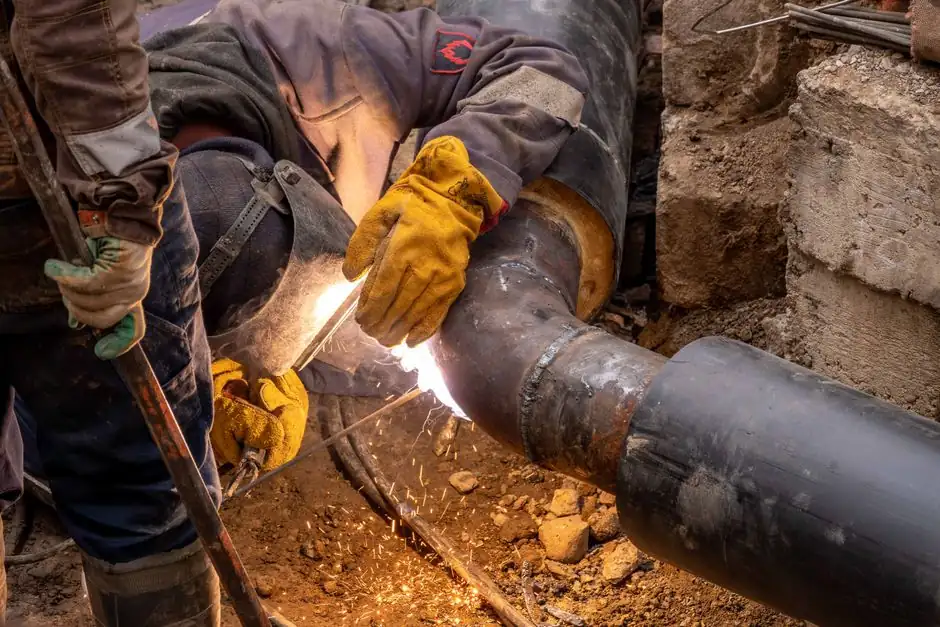
Collapsed sections, severe bellies, or pipe that's lost structural integrity need replacement. Sometimes that's one bad section; occasionally it's the full run. Modern PVC replacements are effectively lifetime pipe.
What It Costs in Pasco County
Every house differs, but typical ranges we see locally: camera inspection $150-$350 (often credited against work), hydro jetting $300-$700, lining $80-$250 per foot depending on access and diameter, and excavation-replacement quoted per job. Get the camera footage first — it's the difference between paying for what you need and paying for what someone wanted to sell you.
The Bottom Line
Cast iron age alone doesn't condemn a pipe — condition does. If your pre-1975 Pasco home has never had its lines scoped, that inspection is the single most valuable plumbing dollar you can spend this year. Contact us or call 855-722-2970 and we'll take a look.